

At its heart, building rapport with customers is about one thing: making them feel seen and understood. It’s the shift from a purely transactional mindset to creating genuine, personal connections that show you value their business and respect their time. This is how a simple purchase blossoms into a long-term relationship.
Why Customer Rapport Is Your Greatest Competitive Advantage
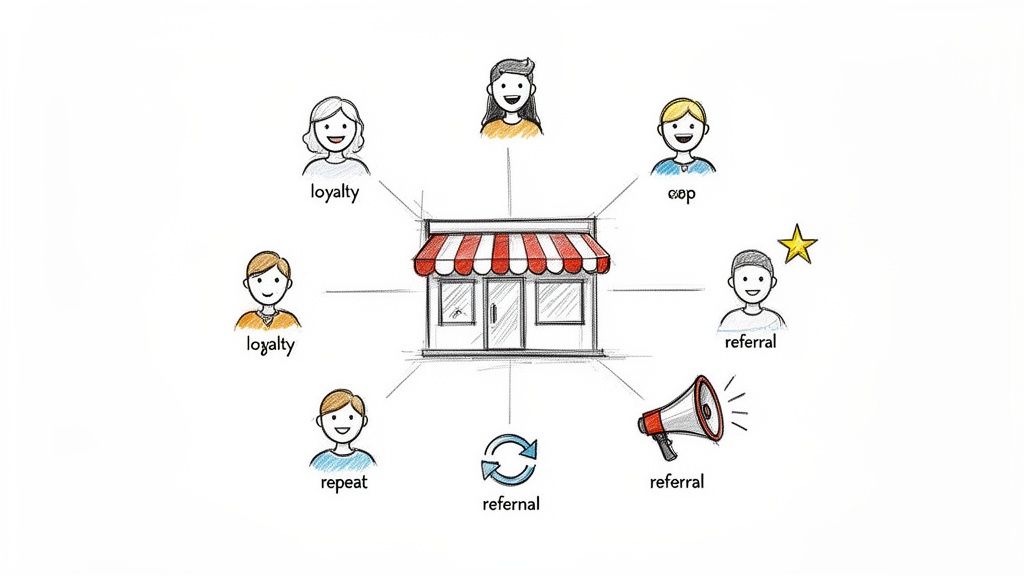
In a crowded e-commerce world, you can't always compete on price or product alone. The real game-changer is the customer experience you deliver. Rapport isn't just a fluffy "nice-to-have" skill; it's a potent business strategy that directly fuels your growth.
When customers feel a real connection to your brand, they don't just buy from you once. They come back, they spend more, and they become your most vocal advocates. This connection transforms your support team from a reactive cost center into a proactive revenue driver. Suddenly, every interaction is an opportunity to strengthen a relationship and build some serious brand equity.
The Tangible Business Impact of Building Rapport
Strong customer rapport delivers measurable results that hit your bottom line. It’s the secret sauce for customer retention, and when you consider that acquiring a new customer costs five times more than keeping an existing one, the financial argument is crystal clear. Loyal customers are also far more likely to try your new products and are generally less sensitive to price.
Here’s a look at how these strong connections pay off for your store:
- Boosted Customer Lifetime Value (CLV): Happy, connected customers stick around and make repeat purchases, dramatically increasing their total value to your business over time.
- Powerful Word-of-Mouth Marketing: A customer who feels valued is your best salesperson. They'll rave about their experience on social media and to their friends—and that’s marketing you can’t buy.
- Higher Conversion Rates: The trust you build makes customers feel more confident hitting that "buy now" button, which means fewer abandoned carts and more completed sales.
- Lower Customer Churn: When something inevitably goes wrong, a customer you have rapport with is much more likely to give you the chance to make it right instead of jumping ship to a competitor.
Moving Beyond Generic Customer Service
Knowing how to build rapport means recognizing that today's shoppers expect more than a quick, canned response. They want to feel like they’re talking to a real person who gets their specific situation. This is where empathy and personalization become your most important tools.
Simply acknowledging a customer’s order history, thanking them for being a repeat buyer, or using a warm, authentic tone can completely change the dynamic. It shows you see them as a person, not just another ticket number.
For lean e-commerce teams, pulling this off at scale can feel like a tall order. But this is exactly where tools like MAILO AI come into play. By plugging directly into platforms like Shopify, these tools can pull customer data to help your team craft responses that are not only accurate but also deeply personal and aware of the customer’s history.
You can dive deeper into practical ways to increase customer loyalty in our detailed guide. This approach gives even small teams the power to deliver the kind of high-touch experiences that create authentic connections and drive long-term success.
Mastering the First Interaction to Earn Lasting Loyalty
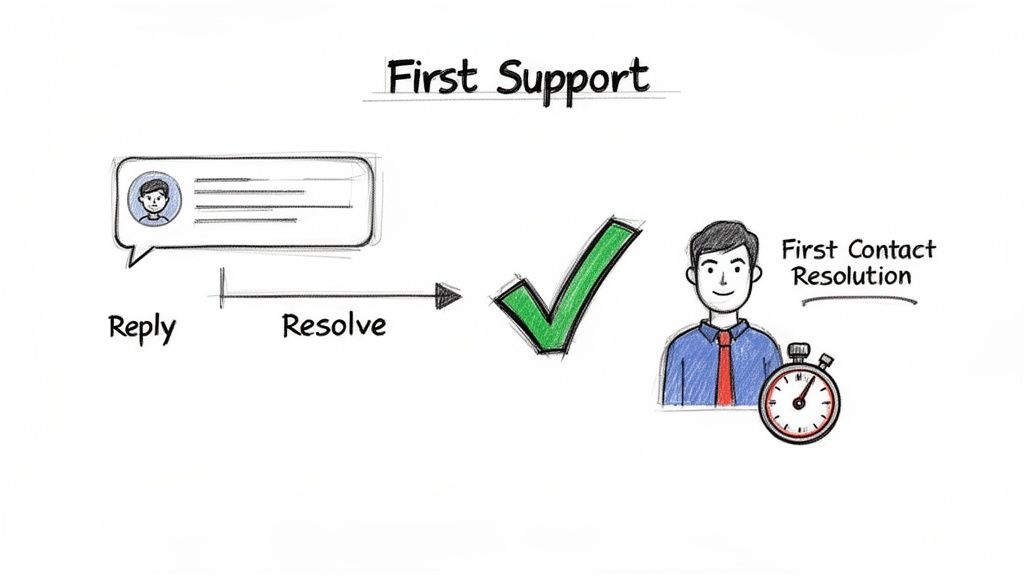
That first support ticket isn't just a question. It's a make-or-break moment for your brand. How you handle that initial conversation sets the tone for the entire relationship, and lasting loyalty isn't built on flashy marketing. It's forged in the trenches of customer support when you solve a problem efficiently on the very first try.
This is what we call First Contact Resolution (FCR), and it's the bedrock of building immediate trust. When a customer reaches out, they're often frustrated or anxious. By eliminating the need for a long back-and-forth, you deliver a seamless experience that proves you're competent and, most importantly, that you respect their time.
Why First Contact Resolution Is So Powerful
Nothing kills trust faster than an endless email chain where a customer has to repeat their issue to multiple agents. In fact, 91% of CX professionals agree that resolving issues on the first try is the single biggest driver of customer loyalty.
On the flip side, the consequences of getting this wrong are severe. A staggering 49% of consumers ditched a company last year because of poor service. The top reason? Having to contact support over and over again for the same problem.
Think about a Shopify store owner using a tool like MAILO AI. A customer emails about a delayed order. Instead of a manual search, the AI instantly pulls real-time Shopify data, drafts a personalized reply in the brand's voice, and resolves the query on the spot. This happens 70% of the time without any human intervention, turning a potentially negative moment into a loyalty-building win.
Crafting the Perfect First Response
To really nail that first interaction, your reply has to be more than just fast—it needs to be clear, empathetic, and complete. Following solid customer onboarding best practices from day one helps, but your first support response is where the rubber meets the road.
Here’s what every high-FCR response should include:
- Acknowledge and Empathize: Start by showing you get it. A simple, “I’m so sorry to hear you’re having trouble with your order” goes a long way.
- Confirm You Understand: Briefly restate their problem. This shows you're listening and prevents the kind of miscommunications that lead to follow-up emails.
- Provide a Clear Solution: Give them a direct answer or a clear, step-by-step resolution. Don't just send them to a generic FAQ page.
- Anticipate What's Next: Think one step ahead. If they're asking about a return, give them the return shipping address and timeline in the same email.
Pro Tip: Create a simple diagnostic framework for your team. For common issues like "Where is my order?" the framework should prompt agents to check the tracking number, confirm the shipping address, and provide an updated ETA, all in that first reply.
Using Technology to Boost FCR
For a growing Shopify store, manually digging up all the information needed for a first-contact resolution is slow and full of potential for mistakes. This is where AI-powered tools become your secret weapon for building rapport.
Platforms like MAILO AI are built for exactly this challenge. By plugging directly into your Shopify store, the AI can:
- Analyze Incoming Emails: It instantly understands what the customer needs—a refund, a shipping update, a product exchange, you name it.
- Access Relevant Data: The system automatically pulls the customer's order history, shipping status, and other key details right from Shopify.
- Generate Accurate Responses: It then crafts a complete, personalized reply that answers the question and includes all the necessary context, like order numbers and tracking links.
This kind of automation isn't just about speed; it's about accuracy. It dramatically increases the chances of resolving the issue on the first attempt, giving your team everything they need to deliver a confident solution that builds immediate trust and lays the groundwork for a loyal, long-term relationship.
Using Personalization to Build Deeper Customer Connections
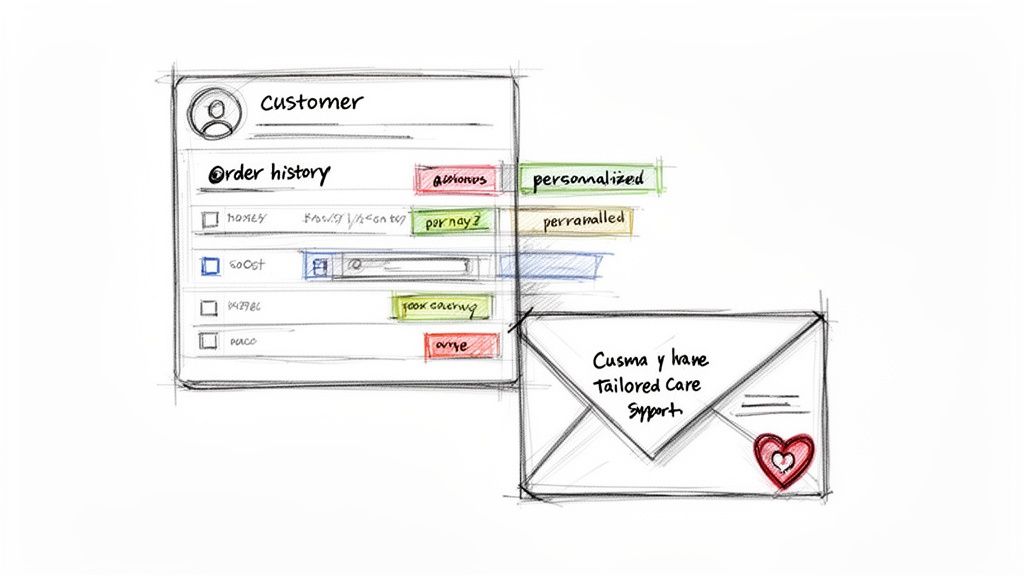
Let's be honest: real rapport is about more than just slotting {{customer.first_name}} into an email template. In a world flooded with generic, automated messages, deep personalization is what makes a customer feel genuinely seen and valued. It’s the critical difference between a one-off transaction and a lasting relationship.
This means you have to move beyond superficial tricks and start using actual customer data to shape your conversations. For anyone running on Shopify, that data is a goldmine just waiting to be tapped. It tells you a story about each person—what they've bought, the support they've needed, and even the products they've eyed but haven't purchased.
When your team has this information at their fingertips, they can craft responses rich with context. It shows you’ve done your homework and care enough to see them as an individual, not just another ticket number.
Go Beyond the First Name
We’ve all received those emails that use our name but feel completely impersonal. It’s easy to spot, and it doesn't build any connection. The real magic happens when you use specific details from a customer's history with your brand. That’s what proves you're actually paying attention.
Think about the difference. Instead of a bland "Thanks for your email," imagine this: "Hi Sarah, thanks for getting in touch. I see you've been a customer with us since 2022—we really appreciate you sticking with us." That small tweak completely changes the tone of the conversation.
The heart of great personalization is showing awareness. It's about letting the customer know you recognize their history and value their business. This turns a simple support ticket into a genuine moment of connection.
This strategy is crucial when you're dealing with tricky situations. A loyal, high-value customer who keeps having the same issue needs a different approach than a first-time buyer with a simple question. Your data is what allows you to tailor your tone, your solution, and your follow-up perfectly.
Leverage Shopify Data for Context-Rich Responses
Your Shopify backend is filled with opportunities to create these "wow" moments. By pulling this data directly into your support workflow, you give your team the context they need to forge stronger relationships.
Here are a few practical ways to put this data to work:
- Reference Past Orders: Mentioning previous purchases shows you understand their tastes. "I see you loved our winter collection last year, so I thought you'd want a heads-up about the new line..."
- Acknowledge Loyalty: A simple "Thanks for being one of our best customers!" can make a repeat buyer feel incredibly valued.
- Know Their Support History: Nothing is more frustrating than having to repeat yourself. Reviewing past tickets and referencing a previous issue shows you remember them and are committed to getting it right.
This isn't just a nice-to-have. Recent data shows that for 70% of customers, a brand's understanding of their individual needs is a major factor in their loyalty. Get it wrong, and the consequences are steep. A staggering 89% of customers get frustrated repeating their problems to different agents, and nearly a third will walk away for good after just one bad experience.
Personalization Tactics Comparison
To see the real-world difference, let's compare some common personalization tactics. The goal is to move from basic, low-impact gestures to advanced, data-informed interactions that build true loyalty.
| Tactic | Basic Personalization Example (Low Rapport) | Advanced Personalization Example (High Rapport) |
|---|---|---|
| Greeting | "Hi John," | "Hi John, thanks for being a customer since 2021!" |
| Order Issue | "Sorry about your order issue. What was the order number?" | "Hi John, I'm sorry to see order #54321 had a problem. Let's get this fixed for you right away." |
| Product Question | "You can find sizing info on the product page." | "I see you bought the medium in our classic tee before. The fit on this new jacket is similar, so a medium should be perfect." |
| Apology | "We apologize for the inconvenience." | "I know you've had a shipping delay before, and I'm truly sorry it's happened again. This isn't the experience we want for our loyal customers." |
As you can see, the advanced examples aren't just polite—they're informed. They show the customer you're not just reading a script; you're looking at their specific history and treating them like a person. That's how you build a lasting connection.
Automating Personalization Without Losing the Human Touch
Of course, manually digging through Shopify for every single email isn't realistic as you grow. That’s where smart automation becomes your best friend in building rapport.
Tools like MAILO AI plug right into Shopify, pulling customer and order data directly into your support inbox. The AI can then generate hyper-personalized draft replies that your team simply needs to review and send.
Let's walk through a scenario:
A customer named Alex, who has placed five orders in the last year, emails you because an item arrived damaged.
- A generic response: "We are sorry your item was damaged. Please send a photo."
- A MAILO AI-powered response: "Hi Alex, I'm so sorry to hear the ceramic mug from your latest order (#54321) arrived broken. We know how much you love our kitchenware based on your past orders, so this is especially disappointing. I've already processed a free replacement for you—it will ship out today. Thanks for being such a loyal customer!"
See the difference? The second response immediately builds rapport by acknowledging loyalty, referencing the specific order, and offering a proactive solution. This is how you turn a frustrating problem into an opportunity to strengthen a relationship. Achieving this kind of personalization at scale with AI receptionists is no longer a futuristic dream; it's a practical strategy for today's top brands.
By blending rich customer data with intelligent automation, you can deliver these deeply personal interactions consistently. Every customer can feel like a VIP. For a deeper dive, check out our guide on https://mailo.ai/blogs/customer-support-automation/how-to-improve-ecommerce-customer-experience.
Building Rapport Proactively Before Customers Reach Out
The best way to build a real connection with your customers is to get ahead of the conversation. Don't wait for them to reach out to you. While stellar reactive support is a must-have for fixing problems, proactive engagement is where you build the kind of loyalty that lasts.
It’s all about shifting your mindset. Instead of just putting out fires, you’re creating small, positive moments all along the customer's journey. This is how a simple transaction becomes a memorable experience. You’re not waiting for the inevitable "Where's my order?" email; you’re sending an awesome shipping notification before they even have a chance to wonder. Instead of just hoping for a review, you create the perfect moment to ask.
These actions send a powerful message: you care about their entire experience, not just the sale. For anyone running a Shopify store, this is gold. Every single post-purchase event—from order confirmation to delivery—is a golden ticket to strengthen your connection with a customer.
Turning Post-Purchase Silence Into an Opportunity
Think about the dead zone between when a customer clicks "buy" and when their package finally shows up. For most brands, it's radio silence, broken only by a generic, robotic order confirmation. This is a massive missed opportunity.
You can actually use this time to build excitement and add real value. Your communications can become part of the product experience itself, not just a boring update.
Give these proactive touchpoints a try:
- A Shipping Confirmation with Personality: Ditch the default template. Inject your brand's voice and get them excited. Something like, "Heads up! Your new gear is officially on the move and should be with you soon. We can't wait for you to try it out."
- The "How's It Going?" Email: A few days after delivery, a simple, low-pressure message can work wonders. "Just wanted to check in and see how you're liking everything. We hope you love it!"
- Genuinely Useful Content: If someone bought a product that has a bit of a learning curve, send them a quick-start guide or a link to a helpful video. This adds instant value and proves you’re invested in their success long after you've made the sale.
These small, automated gestures show you're thinking about them beyond the checkout. That’s the foundation of real rapport.
The Power of Asking for Feedback First
Reaching out proactively does more than just build goodwill—it can also neutralize potential problems before they ever blow up. You're giving customers a direct, private line to share their thoughts, which makes them feel heard and respected from the get-go.
Proactive engagement doesn't just improve customer service; it transforms it into a powerful relationship-building tool. A whopping 77% of customers say they view brands more favorably if they're the ones to reach out for feedback first.
This one simple act can be the difference between a silently unhappy customer who never comes back and a vocal, loyal advocate. The stakes are incredibly high. We know that 56% of customers will just quietly leave a brand after a bad experience. Even more telling, a stunning 93% of shoppers are more likely to buy again from companies with excellent customer service. By opening the door to a conversation, you show you're confident in what you sell and are committed to their happiness. You can dig into more of this data in this comprehensive customer service report from zendesk.com.
Using Automation to Scale Proactive Rapport
Let's be realistic: you can't manually manage this level of proactive outreach, especially as your brand grows. This is where automation becomes your best friend in building customer relationships.
By connecting a tool like MAILO AI to your Shopify store, you can set up smart, automated triggers that handle all this outreach for you. The system can be set up to send perfectly timed, personalized messages based on exactly where a customer is in their journey.
Here’s how it might play out in the real world:
- A customer buys a new skincare product.
- MAILO AI immediately sends a branded, exciting shipping notification.
- Three days after Shopify marks the package as "Delivered," the system automatically sends a follow-up email.
- The email doesn't just ask for a review; it asks, "How are you enjoying your new routine?" and includes a link to a blog post with tips for getting the best results.
- A week later, another automated email goes out requesting a product review—right when they've had enough time to actually form an opinion.
This entire sequence runs on autopilot. You’re creating a seamless, thoughtful experience that makes every customer feel seen and valued, without lifting a finger. Automating these key touchpoints ensures no one slips through the cracks, allowing you to build rapport at scale and turn customers into a true community.
Scaling Your Personal Touch with Smart Automation
When your Shopify store starts to take off, a strange thing happens. The very thing that won you those early customers—that personal, one-on-one connection—becomes the hardest thing to maintain.
How do you keep building rapport when you're suddenly dealing with hundreds, or even thousands, of emails a day? The answer isn't just to hire more people. It’s about working smarter with smart automation.
This isn't about replacing your team with robots. It’s about scaling your personal touch. By setting up intelligent workflows, you can automate the repetitive, time-sucking tasks, freeing up your team to focus on the complex, high-empathy conversations that actually build relationships and create customers for life.
Finding Your Automation Sweet Spot
The real trick to scaling rapport is knowing what to automate and what requires a human touch. Go too far with automation, and your brand feels cold and impersonal, which is the exact opposite of what you’re trying to achieve. The goal is to find that perfect balance.
A good way to think about it is by sorting tasks based on their complexity and emotional weight.
- Ideal for Full Automation: These are your high-volume, low-stakes questions. Think "Where is my order?" or basic product questions. An AI can pull data directly from Shopify and answer these with 100% accuracy, no human needed.
- Perfect for Semi-Automation: Here’s where things get interesting. For more nuanced issues, an AI can analyze the customer's email, gather all the relevant order data, and draft a perfect, personalized reply. Your support agent simply has to review it and click send.
- Reserve for Human Experts: High-stakes conversations—like a frustrated long-term customer or a sensitive product issue—should always be handled by a person. Always.
By automating the simple stuff, you're not just saving time. You’re strategically reallocating your team’s most valuable resource—their emotional energy—to the moments where it matters most.
How AI-Powered Workflows Build Rapport
A modern platform like MAILO AI goes way beyond canned responses. It acts like an intelligent assistant for your whole team. Because it connects directly to Shopify, it understands the full context behind every single customer inquiry.
Here’s what that looks like in the real world:
- Automatic Ticket Categorization: An email lands in your inbox. MAILO AI instantly reads it, understands the intent, and tags it as "Return Request," "Damaged Item," or "Shipping Question." This keeps your support queue organized and makes sure urgent issues get bumped to the top.
- AI-Suggested Replies: For those semi-automated tasks, the AI generates a complete, on-brand response. It pulls the customer’s name, order number, and past interactions to craft a reply that feels like it came from a person who knows their history. Your agent just gives it a quick glance and sends it off.
- Proactive Engagement Triggers: This is where you can really shine. You can set up the system to send messages based on Shopify events. For instance, you can automatically follow up a week after delivery to check in, ask for feedback, or even delight a customer with a helpful tip related to their purchase.
This 3-step process shows how you can use a proactive follow-up, feedback loop, and delight sequence to build rapport automatically.
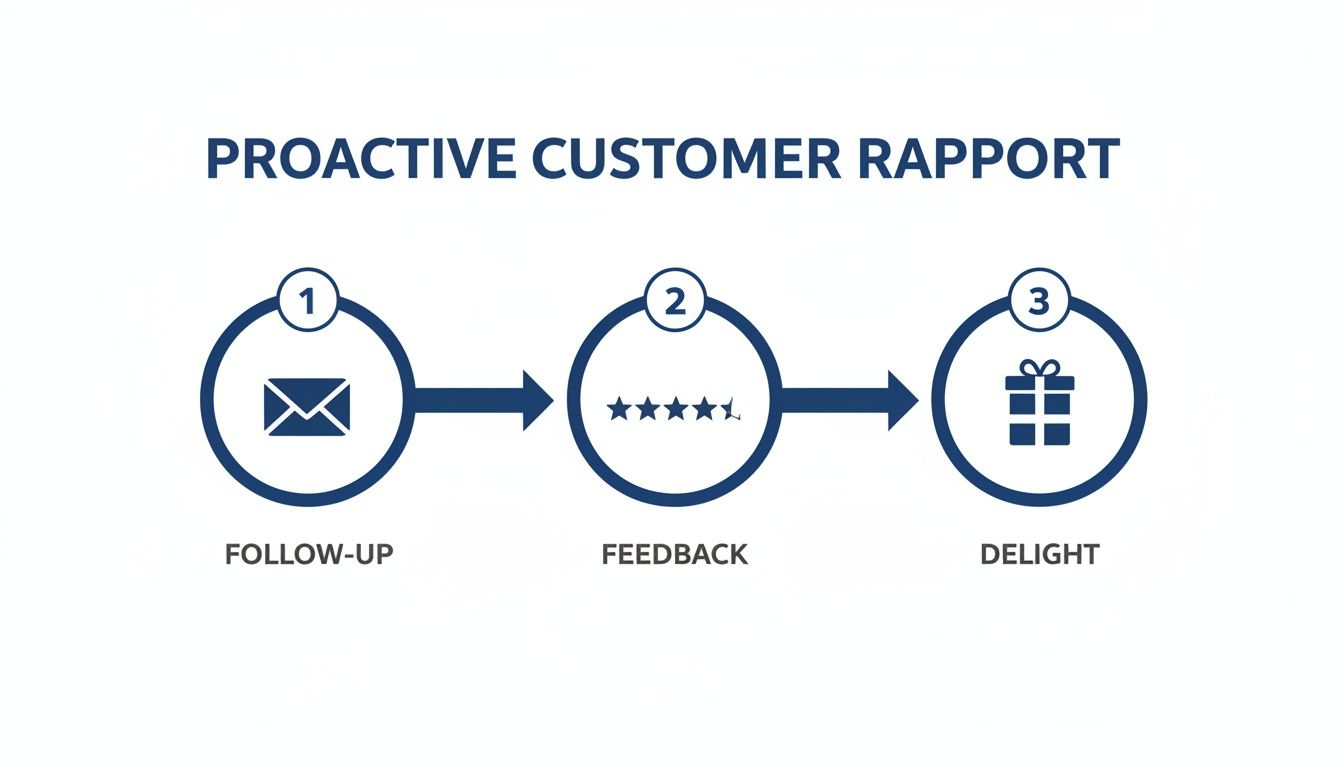
This kind of structured approach means you're constantly creating positive touchpoints throughout the customer's journey, without lifting a finger.
When you put these systems in place, you create a support engine that’s both incredibly efficient and deeply personal. It lets a small team deliver a VIP experience to every single customer, every single time. For more on this, check out our guide to e-commerce marketing automation. This is how you build a brand that people don't just buy from, but truly connect with.
Your Top Questions Answered
Let's tackle some of the most common questions Shopify owners have when it comes to building real rapport with customers. Think of this as the quick-start guide to putting all these ideas into action.
How Can I Build Rapport Without Sounding Unprofessional?
This is a classic balancing act. You want to sound like a helpful, confident expert, not a corporate robot or your customer’s new best friend. I like to call the sweet spot "professional warmth."
You get there by keeping your tone positive, always using the customer's first name, and genuinely trying to understand their situation. Steer clear of slang or too many emojis unless that's really your brand and the customer is already communicating that way. A good rule of thumb is to mirror their tone while staying helpful and polished. That’s what builds trust.
Key Takeaway: Being professional isn’t about being stiff and formal. It’s about being competent, respectful, and reliable. You can absolutely be warm and personal while showing you’re an expert ready to solve their problem.
What’s the Single Most Important Skill for Building Rapport?
If I had to boil it all down to one thing, it's active listening. Real rapport isn't built on what you say; it's built on how well you prove you understand what the customer is saying—and just as importantly, what they're not saying.
In an email or a support ticket, active listening means reading their entire message before you even think about replying. Don't just scan for keywords. You need to grasp the full context, their frustration level, and what they actually want. This simple habit prevents so many misunderstandings and endless back-and-forth emails. It makes the customer feel heard, which is the cornerstone of any solid relationship.
Is It Possible to Build Rapport in a Fully Automated Response?
Yes, absolutely—but only if you set it up thoughtfully. A smart automated response can build rapport if it feels personal, timely, and genuinely helpful. The trick is to use the data you already have to make the automation feel human.
For instance, an automated reply to "Where is my order?" is a perfect opportunity. Instead of a generic brush-off, you can delight them.
- Bad Automation: "Your order status can be found on our website."
- Good Automation: "Hi Sarah, your order #54321 is on its way! You can track it here: [link]. It should arrive by this Friday. We hope you love it!"
The second example is proactive and packed with the exact info the customer needs. It builds trust instantly, even without a human typing on the other end.
How Do I Handle a Really Angry Customer and Still Build Rapport?
When a customer comes in hot, your first job is to de-escalate, not get defensive. The "listen, acknowledge, solve" framework is your best friend. Building rapport with an angry customer starts the second you validate how they feel.
Kick off your reply with sincere empathy. Something like, "I can completely understand why you're frustrated, and I'm so sorry this happened," immediately shows you're on their side. Then, acknowledge the specific problem they mentioned so they know you actually read what they wrote.
Only after you’ve validated their emotions do you pivot to the solution. Give them a clear, simple plan to fix it. Honestly, turning a bad experience into a great one is one of the most powerful loyalty-building moves you can make. A customer who feels you went above and beyond to fix a mistake can become a bigger advocate than someone who never had a problem in the first place.
Ready to scale your personal touch and build lasting customer relationships? MAILO AI integrates seamlessly with Shopify to help you deliver faster, smarter, and more personalized support. Start your free trial today and see the difference.