

When it comes to improving your ecommerce customer experience, it all boils down to one simple idea: make every single interaction feel personal, seamless, and genuinely valuable. This isn't just about a slick website. It's about creating a frictionless shopping journey, offering support the moment it's needed, and mastering the post-purchase phase to turn first-time buyers into lifelong fans.
In the end, that connection is the one competitive advantage that truly lasts.
Why Your Customer Experience Is Your Biggest Differentiator
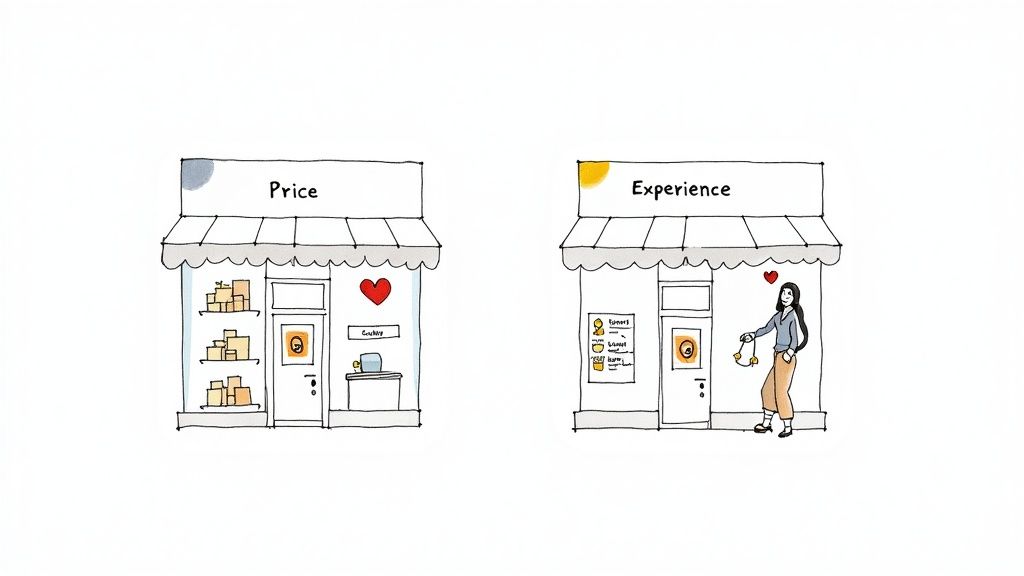
In today’s crowded online world, trying to compete on product and price alone is a race to the bottom. Someone will always be cheaper, and product trends shift overnight. The one thing your competitors can't copy is the relationship you build with your customers. A standout customer experience (CX) has become the real driver of loyalty and repeat business.
Modern shoppers don't just buy things; they buy into brands. They want to feel understood, valued, and supported well beyond the checkout page. A great experience can turn a casual browser into a die-hard advocate, while one clumsy interaction can send them straight to your competition—for good.
The Real Impact of a Great CX
Investing in customer experience isn't a "nice-to-have" expense. It's a core business strategy with a massive, measurable return. Brands that obsess over their CX see real-world benefits that hit their bottom line.
- It builds fierce loyalty. Happy customers come back. A great experience forges a connection to your brand that keeps them choosing you over and over.
- It boosts conversion rates. When a website feels intuitive, personalized, and trustworthy, shoppers are far more likely to click "buy" instead of abandoning their cart.
- It creates free marketing. Delighted customers become your most powerful marketers, spreading the word to friends, family, and on social media.
Think about it: studies consistently show that a staggering 98% of consumers read online reviews before making a purchase. This just goes to show how critical social proof—born directly from good experiences—has become.
Your Roadmap to a Better Experience
This guide is your playbook for turning casual shoppers into true brand champions. We're going to skip the fluff and get straight to the actionable steps you can take to elevate every single customer touchpoint. We’ll cover the core pillars of a modern CX strategy, from personalizing the shopping journey to delivering instant, AI-powered support and mastering that all-important post-purchase phase.
To get started, here's a quick overview of the essential components for building a customer experience that drives real loyalty and growth.
Core Pillars of a Modern Ecommerce CX Strategy
| Pillar | Primary Goal | Actionable Tactic |
|---|---|---|
| Email & Inbox Automation | Provide instant, 24/7 support | Use AI to answer common questions and route complex issues to human agents. |
| Personalization | Make customers feel understood | Recommend products based on browsing history and past purchases. |
| Post-Purchase Experience | Build long-term loyalty | Create a branded tracking page with proactive shipping updates. |
| Returns & Exchanges | Remove friction from a key pain point | Implement a self-service returns portal with clear instructions. |
| Shipping Transparency | Manage expectations and build trust | Display estimated delivery dates clearly on product and checkout pages. |
| Self-Service Support | Empower customers to find answers | Develop a comprehensive and easily searchable knowledge base or FAQ section. |
| Analytics & KPIs | Measure what matters to improve | Track metrics like Customer Satisfaction (CSAT) and Net Promoter Score (NPS). |
This framework gives you a solid foundation to build upon. And for those who want to dive even deeper, FeedbackRobot has a comprehensive guide on boosting your ecommerce customer experience with even more valuable insights.
Building A Seamless and Personalized Shopping Journey
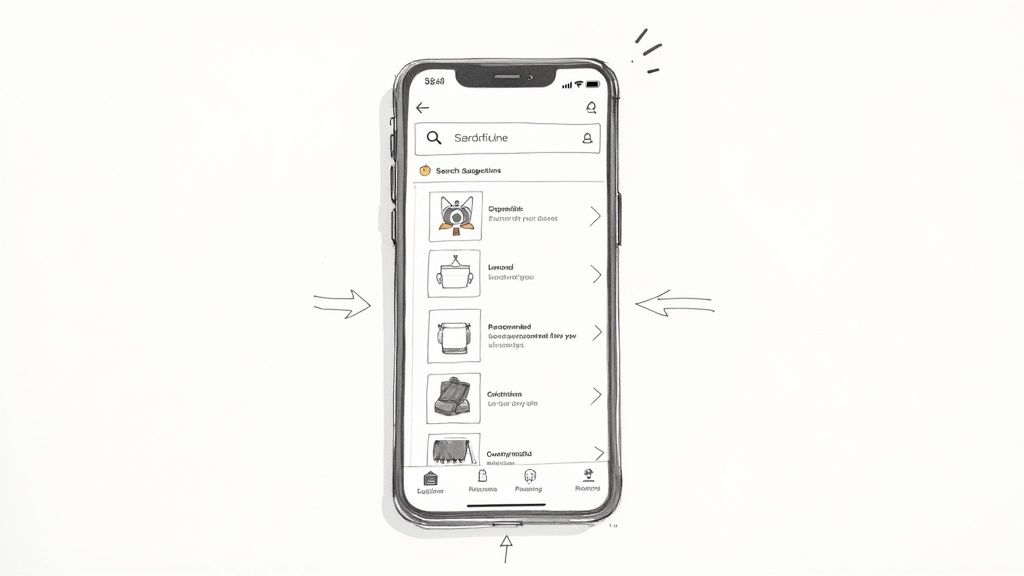
The pre-purchase experience is your brand’s first handshake. This is where a potential customer decides if you’re worth their time and trust. A clunky, generic journey is a recipe for a quick exit, while a seamless, personal one invites them to stick around and explore.
Every click, scroll, and search query is an opportunity to show you understand their needs. Getting this right means anticipating what they’re looking for and removing any friction that might stand in their way. It’s about making the entire process feel less like a transaction and more like a helpful conversation.
Adopting a True Mobile-First Mindset
Having a "mobile-friendly" site isn't a feature anymore; it’s the bare minimum. A true mobile-first approach means you design the entire shopping experience for the smallest screen first, because that's where most of your traffic probably comes from. Mobile commerce is taking over online sales, but it comes with a massive catch.
Poor mobile design is a conversion killer. Just look at the numbers: mobile shopping cart abandonment rates can hit a staggering 85.6%, which is way higher than on desktop. This points to a huge disconnect where brands are great at getting mobile visitors, but terrible at converting them because the experience is just too frustrating.
So, how do you fix it? You have to obsess over what makes a mobile journey genuinely seamless.
- Effortless Navigation: Keep your header "sticky" at the top of the screen with a clear menu and search icon. All buttons and links need to be big enough for a thumb to tap easily. No fat-fingering allowed.
- Smarter Search: Make that search bar impossible to miss. It should offer predictive, auto-complete suggestions as someone types. This small tweak saves a ton of effort and gets people to what they want, faster.
- Optimized Checkout: A mobile checkout needs to be a simple, multi-step flow with as few fields as possible. Offering express payment options like Apple Pay or Google Pay is a no-brainer—it lets them skip all the manual entry.
Powering Personalization with Smart Data
Personalization is what turns your generic catalog into a curated boutique for every single visitor. And I don’t just mean using someone's first name in an email. Real personalization uses browsing data and purchase history to make the on-site experience immediately relevant and helpful.
The goal of personalization isn't to be clever; it's to be genuinely useful. When a customer feels like your store 'gets' them, you're not just selling a product—you're building a relationship.
This is where automation and AI become your secret weapon. For instance, a tool like MAILO AI can analyze customer behavior in real-time to serve up dynamic content and product recommendations, all without you needing a dedicated data science team.
Here’s how to put it into practice:
- Dynamic Product Recommendations: For returning visitors, show them a "Recently Viewed" section on the homepage so they can pick up right where they left off. On product pages, add a "You Might Also Like" carousel based on the item they’re looking at.
- Tailored On-Site Content: If a customer who previously bought running shoes comes back, your homepage banner should show off new athletic apparel. If a brand new visitor arrives from a specific ad campaign, the on-site messaging should match what they just saw.
- Geo-Targeted Offers: Use their location to display helpful info, like accurate shipping times to their area or even products that are trending with other shoppers nearby.
By weaving these elements together, you create a journey that feels intuitive and intelligent. This smooth, relevant path is key to cutting down on abandoned carts and building the trust you need to earn that first sale. For more strategies on turning these personalized experiences into measurable gains, check out our guide on https://mailo.ai/blogs/conversion-growth.
Delivering Instant Support That Empowers Customers
Let's face it, your customers are in a hurry. The old days of waiting a day or two for an email response are long gone. In today's e-commerce world, support has to be instant, accessible, and frankly, empowering. It's about shifting your customer service from a reactive "problem-solving" department to a proactive engine for loyalty.
The whole game really boils down to two things: speed and self-service. When you give people immediate answers through live chat or AI, you're meeting them exactly when they need help. At the same time, when you arm them with a solid, searchable knowledge base, you give them the power to solve things on their own, which builds a surprising amount of trust and independence.
The Real ROI of Instantaneous Support
Investing in faster support isn't just a "nice-to-have" to make customers feel good; it directly impacts your bottom line. I've seen it time and again: slow, clunky support is one of the fastest ways to lose a customer for good. People just don't have the patience for it anymore.
The data backs this up completely. Recent reports show that a whopping 72% of customers want immediate service, and 49% have actually ditched a brand because of a bad support experience. Those numbers are huge. They show the incredible return you get from investing in faster channels like live chat and smart AI automation.
The key takeaway is simple: Speed builds trust, and trust drives sales. Every minute a customer spends waiting is another minute they could be checking out your competitor.
Embracing Automation for 24/7 Availability
For most online stores, having a team of support agents ready to go 24/7 just isn't in the budget. This is exactly where AI and automation step in to become your first line of defense, handling the common stuff instantly, at any time of day or night.
An AI-powered chatbot, for instance, can be your tireless front-line employee. You can train it on your store's policies, product specs, and shipping details to handle the repetitive questions that jam up your inbox. Think about the classic "Where is my order?" (WISMO) ticket. A chatbot tied into your Shopify data can pull up live tracking info in a second, closing the ticket without a human ever touching it. This frees up your real team to focus on the more complex, high-value conversations that actually need a human touch. To really get into the weeds on this, check out our complete guide on customer support automation.
Here are a few practical ways I've seen this work brilliantly:
- Live Chat with AI Triage: Use a bot to greet visitors, figure out what they need, and then route them to the right place—maybe a help article or the correct human agent.
- Automated Email Responses: Tools like MAILO AI can read incoming emails and instantly draft personalized replies for things like return requests or size-and-fit questions, often solving the issue before an agent even sees it.
- Proactive Chat Prompts: Set up a chat window to pop up on high-intent pages, like your checkout. A simple, "Got a question about shipping? I can help!" can be enough to save a sale.
Empowering Customers with a Self-Service Knowledge Base
While instant chat is great, a surprising number of customers would actually rather find the answer themselves than talk to someone. This is why a comprehensive, well-organized, and easily searchable knowledge base is one of the most powerful—and underrated—tools in your CX toolkit.
Think of it as the ultimate FAQ page. By getting ahead of customer questions and laying out clear, step-by-step answers, you can deflect a massive number of support tickets. It's a win-win: your team saves time, and your customers feel capable and in control.
Building Your Knowledge Base from Real Data
The best content for your knowledge base is sitting right in your support inbox. Don't guess what people are asking; use the data you already have.
- Analyze Your Tickets: Pull a report of your most common support requests. The top 5-10 questions are your starting point for new articles. It’s almost always things like shipping policies, how to make a return, sizing guides, or warranty info.
- Write Clear, Actionable Content: Keep it simple. Use clear headings, short paragraphs, and bullet points. If you’re explaining a process, a quick screenshot or a short video is worth a thousand words.
- Make It Searchable: This is critical. The most beautiful knowledge base is useless if no one can find anything. Make sure your search bar is front-and-center and works well.
When you combine the immediacy of AI-driven support with the empowerment of a great self-service hub, you create a support system that's not just efficient and scalable, but one that customers genuinely appreciate.
Mastering The Post-Purchase Phase To Build Loyalty
The moment a customer clicks "buy" isn't the finish line; it’s the starting gun for the most critical part of their journey. The post-purchase experience is where you stop being a transaction and start becoming a trusted brand. This is your prime opportunity to alleviate buyer's remorse, build confidence, and earn that next sale before they’ve even opened the box.
Forgetting about customers after taking their money is a massive missed opportunity. A thoughtful, proactive post-purchase flow turns one-time buyers into loyal advocates. It’s about managing expectations, providing value, and showing you care about their experience, not just their wallet.
Proactive Communication That Eliminates Anxiety
Let's be honest, the single most common question any ecommerce brand gets is, "Where is my order?" This anxiety is a major friction point. Proactive communication isn't just good service; it's a defensive strategy that dramatically reduces support tickets and builds incredible trust.
Instead of making them hunt for a tracking number in an old email, bring the information directly to them. Use automated email and SMS flows to send updates at key moments.
- Order Confirmation: An instant, clear confirmation that their order was received.
- Shipping Notification: A message the moment it leaves your warehouse, with a direct link to a branded tracking page.
- Out for Delivery: A quick alert on the day of arrival to build excitement.
- Delivered: A final confirmation that their package has safely arrived.
Tools like AfterShip can automate this entire process, creating a seamless branded tracking experience that keeps customers informed and directs them back to your site—not a generic carrier page.
Reimagining Returns as a Retention Tool
Nobody likes dealing with returns, but a difficult returns process is one of the fastest ways to lose a customer for good. Framing returns as a logistical headache is a huge mistake. Instead, you need to see it for what it is: a powerful retention play.
A simple, transparent, and hassle-free returns process signals to customers that you stand behind your products. It removes the risk from their purchase decision, making them far more likely to buy from you again.
Modern customers expect a self-service option. Forcing them to email support, wait for an RMA number, and print a label you send them feels completely outdated. A dedicated returns portal is now the standard for any serious ecommerce brand.
Solutions like Loop Returns empower customers to initiate returns or exchanges on their own through a simple, branded interface. This not only cuts down on manual work for your team but also gives you a chance to encourage an exchange over a refund, helping you retain revenue.
To foster lasting relationships and secure repeat business, it's essential to implement robust ecommerce customer retention strategies, and a frictionless returns policy is a cornerstone of that effort.
This flow illustrates a modern, tiered support system. It starts with instant channels like live chat and AI chatbots, then offers a deeper dive with a knowledge base for more complex questions.
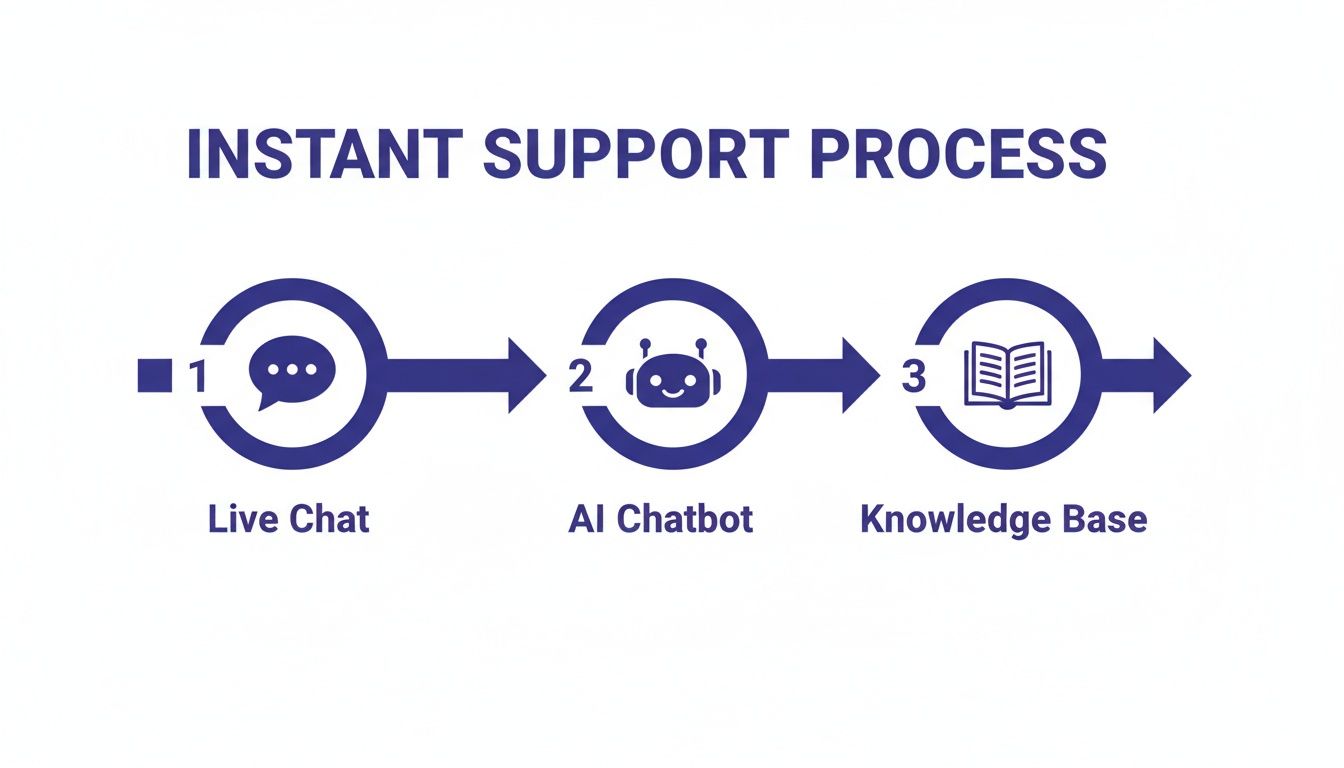
By empowering customers with self-service options first, you resolve issues faster and free up your human agents for the problems that truly need their expertise.
Using Email Automation to Continue the Conversation
Once the product has been delivered, your job still isn't done. The post-purchase period is the perfect time to gather crucial feedback and guide customers toward their next purchase with intelligent cross-sells. Smart email automation can handle all of it.
A few days after delivery, trigger an automated email asking for a review. This timing is crucial—you want to catch them while their positive experience is still fresh in their mind. Make it dead simple by linking them directly to the product page where they can leave their feedback.
Then, a week or two later, follow up with another automated email, this time tailored to their specific purchase.
- Bought a consumable product? Send a timely reminder to re-order.
- Bought a skincare set? Suggest a complementary product, like a sunscreen or serum.
- Bought a piece of technical gear? Offer helpful content, like a setup guide or a "pro tips" video.
This isn't about spamming them with random offers. It’s about providing genuine value that enhances their original purchase and subtly introduces them to other products they’ll love. By mastering this post-purchase flow, you create a self-sustaining loop of happy, repeat customers.
Using Omnichannel Strategy And Data To Fuel Growth
Putting all these pieces together is what really separates a decent customer experience from a great one. An omnichannel strategy makes your brand feel consistent and familiar, no matter where a customer bumps into you. It's about creating a single, ongoing conversation that flows effortlessly from an Instagram DM to an email to your website’s live chat.
Your customers don't see channels; they just see your brand. When the experience is disjointed—say, your social media is fun and quippy but your support emails sound like a corporate robot—it creates friction and chips away at trust. True omnichannel means the customer's history and context travel with them, making every interaction smarter and more relevant than the last.
Defining Your Omnichannel Experience
A real omnichannel approach is so much more than just being active on a bunch of platforms. It’s about making sure the experience is truly interconnected.
For instance, a customer should be able to start a conversation with a chatbot on your site, get interrupted, and then pick up that exact same conversation via email an hour later without having to explain everything all over again.
This unified approach pays off big time. We know that companies who nail personalization—a huge part of omnichannel—can generate 40% more revenue than their peers. On top of that, omnichannel shoppers tend to spend about 30% more than single-channel buyers. It's a clear signal that a cohesive experience directly impacts customer value. You can discover more insights about CX trends on fullview.io to see more of the data behind this.
Moving Beyond Vanity Metrics
If you want to genuinely improve your e-commerce customer experience, you have to measure what matters. It's easy to get sidetracked by vanity metrics like page views or social media likes, but they don't tell you anything about the quality of the customer's journey. Instead, you need to zero in on KPIs that reflect what the customer is actually feeling.
Here are the metrics that will give you real insight:
- Customer Effort Score (CES): This is all about measuring how easy it was for a customer to get help. A simple post-support survey asking, "How easy was it to handle your request?" gives you a direct look at your friction points.
- First Contact Resolution (FCR): This metric tracks the percentage of support issues you solve in a single interaction. A high FCR is a great sign—it means your team is efficient, and your customers aren't getting stuck in frustrating back-and-forth loops.
- Customer Satisfaction (CSAT): Typically measured with a quick "How would you rate your experience?" survey, CSAT gives you a snapshot of customer happiness right after a key moment, like a purchase or a support chat.
These are the numbers that paint a clear picture of where your experience is winning and where it’s falling short.
Creating a Powerful Feedback Loop
Just collecting this data isn't enough. The real magic happens when you create a feedback loop—a continuous cycle of listening, analyzing, acting, and measuring again.
Think of customer data not as a report card, but as a roadmap. It shows you exactly where the bumps in the road are so you can smooth them out for the next traveler.
Let’s say you notice your CES scores are consistently low for returns. That’s your cue to dig in. Is the returns policy confusing? Is the online portal a pain to use? That data points you directly to the source of the frustration so you can fix it.
This process—turning data into action—is the key to how you can improve your ecommerce customer experience for the long haul. You stop guessing what customers want and start responding to what their actions and feedback are telling you. This is a core part of modern e-commerce, and understanding how AI is transforming e-commerce strategy in 2025 can give you a major leg up. By pairing smart omnichannel execution with sharp data analysis, you build a powerful engine for growth that’s fueled by happy, loyal customers.
Common Questions About Improving Ecommerce Customer Experience
Thinking about overhauling your customer experience can feel like a massive project. You know it’s crucial, but with so many moving parts, where do you even start? Let's break down some of the most common questions I hear from store owners to give you a clear path forward.
Where Should I Start for the Biggest Impact?
If you have limited time and resources, zero in on the one area that causes the most customer anxiety and clogs up your support inbox: the post-purchase experience. This is where you can get the quickest wins and make an immediate, tangible difference.
The first, and easiest, thing to do is set up proactive shipping notifications. Stop making your customers dig through their emails for a tracking number. Instead, automatically send them an email or SMS when their order ships, is out for delivery, and finally, when it lands on their doorstep. This one simple change builds a ton of trust, shows you’re on top of things, and dramatically cuts down on those "Where is my order?" (WISMO) tickets.
How Can I Measure the Success of My CX Efforts?
You need to know if your hard work is actually paying off. To do that, you have to track the right metrics—not just vanity numbers, but KPIs that give you a real pulse on customer happiness and how efficiently your team is operating.
- Customer Effort Score (CES): After a support ticket is closed, ask a simple question: "How easy was it to get your issue resolved?" A low effort score is a fantastic sign that you're creating a smooth, painless experience.
- First Contact Resolution (FCR): What percentage of issues are you solving in the very first reply? A high FCR means your team is knocking it out of the park and customers aren't getting stuck in frustrating back-and-forth email chains.
- Customer Lifetime Value (LTV): This is the long-term proof. As your CX improves, your LTV should climb. It shows that happier customers are sticking with you longer and spending more, directly connecting your support efforts to revenue.
Which Tools Offer the Best ROI for a Small Team?
For a small team, the best tools are the ones that do the heavy lifting for you by automating repetitive work and pulling everything into one place. You don't need a complicated tech stack; you need one or two smart platforms that work beautifully together.
The real goal here is to find a tool that acts as a force multiplier. It should handle the simple, high-volume questions so your team can focus their brainpower on the complex conversations that build genuine customer loyalty.
An AI-powered helpdesk designed specifically for ecommerce is almost always the best bet. Tools that integrate directly with a platform like Shopify can instantly pull up customer and order data. This means they can provide immediate, context-aware answers to questions about order status or returns without a human ever touching the ticket, freeing up a massive amount of your team's time.
Is It Possible to Offer Great Support Without a Big Team?
Absolutely. The secret isn't a huge headcount; it's smart automation and empowering your customers and team. By using an AI tool to handle the flood of common, repetitive questions, you can offer instant, 24/7 support without burning out your small crew.
Think about it: an AI can instantly answer an email asking about your return policy at 2 a.m. and close the ticket on the spot. This lets your team come in fresh in the morning, ready to tackle the more nuanced problems that truly require a human touch. Today, great support is all about speed and accuracy, and both can be scaled dramatically with the right tech.
Ready to see how AI can turn your support emails into a growth engine? MAILO AI integrates with Shopify to provide instant, personalized, and on-brand answers, freeing up your team to focus on what really matters. Start your free trial today and discover a smarter way to support your customers.