

In e-commerce, reactive support, waiting for a customer to complain, is a recipe for churn. The modern customer expects brands to anticipate their needs, solve problems before they happen, and provide a seamless experience from browsing to unboxing. This is the power of proactive customer service. Instead of just putting out fires, you prevent them entirely, building deep-seated trust and loyalty that turns one-time buyers into lifelong fans. A great physical-product example of anticipating customer needs and preventing issues is Amazon's move towards frustration-free packaging, which solves the "unboxing rage" problem before it can even begin.
This same forward-thinking mindset can be applied to your digital communications to create exceptional customer journeys. The difference between a customer who repurchases and one who churns often comes down to how well you managed their expectations and addressed their unspoken questions. Did you get ahead of their "Where is my order?" query? Did you make them feel valued after their purchase? Did you guide them back when they seemed to lose interest?
This article breaks down 8 powerful, data-driven proactive customer service examples specifically for e-commerce stores. We'll move beyond generic ideas and dive into actionable strategies, complete with triggers, templates, and implementation notes for tools like MAILO AI. Our goal is to provide a clear blueprint for transforming your Shopify support from a reactive cost center into a powerful, revenue-generating growth engine.
1. Proactive Order Status Updates
One of the most foundational and effective proactive customer service examples is sending automated, real-time updates about a customer's order status. Instead of waiting for the inevitable "Where is my order?" (WISMO) inquiry, this strategy anticipates the customer's need for information and provides it at key fulfillment milestones: confirmation, processing, shipping, and delivery. This simple act transforms the post-purchase experience from a period of uncertainty into a transparent, reassuring journey.
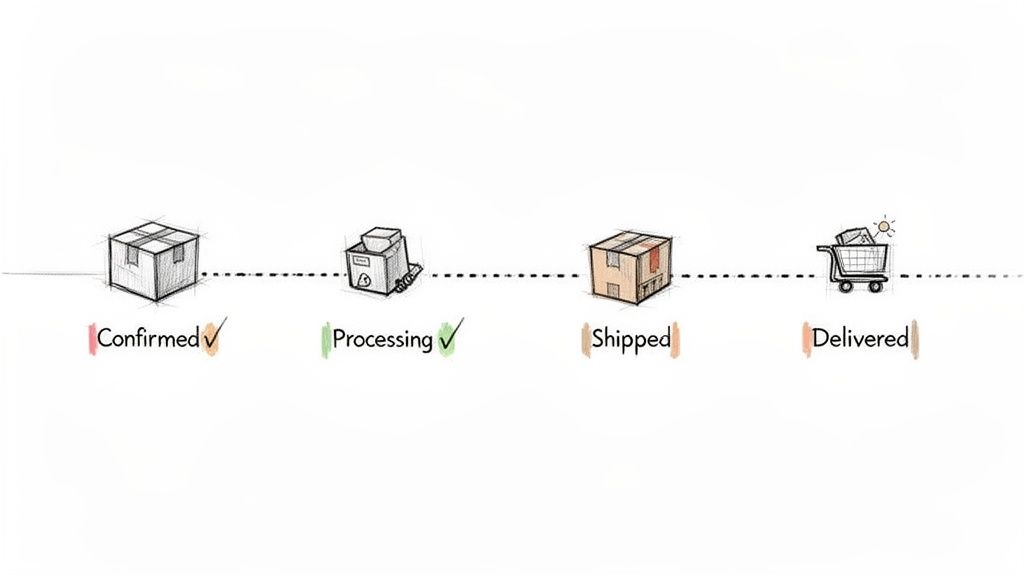
This approach is popularized by e-commerce giants like Amazon and is a native feature for platforms like Shopify. It works by integrating your order management system with your communication channels (email, SMS) to trigger notifications automatically when an order's status changes.
Strategic Breakdown & Implementation
Why It Works: The period between purchase and delivery is often filled with customer anxiety. Proactive updates reduce this friction, build trust, and significantly cut down on inbound support ticket volume related to order tracking.
When to Use It: This strategy is essential for all e-commerce businesses, regardless of size. It is a baseline expectation for modern online retail. If you sell physical products, implementing automated order updates is a non-negotiable first step in proactive support.
Key Insight: A well-executed order update sequence does more than just inform; it reinforces the customer's purchase decision and builds brand loyalty. Each message is a touchpoint that confirms you are a reliable and communicative seller.
Actionable Takeaways
Here is how to implement this for your store:
-
Automation Trigger: Set up triggers in your e-commerce platform (e.g., Shopify Flow) or email service provider that activate when an order status tag changes to
fulfilled,shipped, orout for delivery. - Essential Information: Every shipping notification must include the carrier name, a direct tracking link, and the estimated delivery date. Personalize it by including the customer's name and the specific product(s) being shipped.
- MAILO AI Implementation: Configure MAILO AI to automatically detect and classify incoming emails about order status. You can create a rule that instantly replies to emails containing phrases like "tracking number" or "order status" with a pre-written template that directs the customer to their tracking information, freeing up your support team for more complex issues.
2. Proactive Review and Feedback Requests
Instead of passively hoping for customer feedback, proactively requesting it at the optimal moment is a powerful service strategy. This involves automatically asking for reviews and feedback after a customer has received their product and had a chance to experience it. This approach not only generates valuable social proof and testimonials but also provides direct insights that can be used to improve your products, marketing, and overall customer experience.
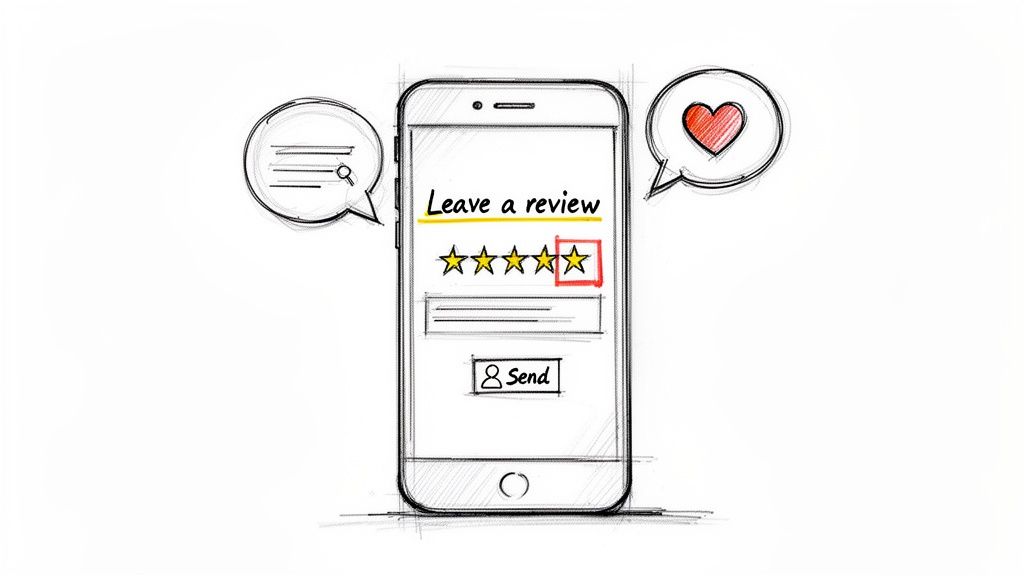
This tactic has been perfected by platforms like Amazon, Etsy, and review-focused apps such as Yotpo and Trustpilot. The system works by setting up an automated email or SMS trigger that sends a personalized request a specific number of days after the order has been marked as delivered, capitalizing on the customer's initial excitement.
Strategic Breakdown & Implementation
Why It Works: Most satisfied customers won't think to leave a review on their own. A timely, direct, and simple request removes the friction from the process, significantly increasing the volume of reviews you receive. These reviews boost credibility, improve SEO, and create a valuable feedback loop for product development.
When to Use It: This is a crucial strategy for any e-commerce brand looking to build trust and social proof. It is particularly effective for new brands trying to establish a market presence or for businesses launching new products that require early feedback and validation. For an in-depth guide, you can learn more about how to collect feedback from customers effectively.
Key Insight: A proactive feedback request shows customers you value their opinion, making them feel heard and respected. This small gesture strengthens the customer relationship beyond the initial transaction and turns a one-time buyer into a contributing member of your brand community.
Actionable Takeaways
Here is how to implement this for your store:
- Automation Trigger: Set up a post-purchase automation flow in your email marketing platform (e.g., Klaviyo, Omnisend) to trigger 3-7 days after an order's delivery status is confirmed. This timing is critical to catch customers while the experience is still fresh.
- Essential Information: Your request should be personalized with the customer's name and the specific product(s) they purchased. Include a direct link to the product review page to make it as easy as possible for them to leave feedback with a single click.
- MAILO AI Implementation: Use MAILO AI to automatically classify and tag incoming replies to your feedback requests. You can set up a rule to tag emails containing negative sentiment (e.g., "disappointed," "didn't work") for immediate review by a human agent, allowing you to proactively resolve issues before a negative public review is posted.
3. Abandoned Cart Recovery with Personalized Recommendations
A classic yet powerful proactive customer service example is reaching out to customers who have abandoned their shopping carts. Instead of simply letting a potential sale disappear, this strategy leverages behavioral data to re-engage customers with personalized emails that include the items they left behind, relevant recommendations, and sometimes a gentle nudge like a small discount. This turns a moment of hesitation into an opportunity for conversion.
This approach has become a cornerstone of e-commerce marketing, with platforms like Shopify and Klaviyo building sophisticated tools to automate these sequences. It works by tracking user sessions and triggering an email or SMS workflow when a customer adds items to their cart and leaves the site without completing the purchase.
Strategic Breakdown & Implementation
Why It Works: Cart abandonment is often caused by distraction or hesitation, not a lack of interest. A timely follow-up reminds the customer of their initial intent and removes friction by providing a direct link back to their cart. Adding personalized recommendations shows you understand their needs and can help them find the perfect product. Implementing proactive strategies can significantly help to reduce cart abandonment and boost checkout conversion rates.
When to Use It: This is a must-have for any e-commerce store. The potential revenue left in abandoned carts is substantial, and recovering even a small fraction of it provides a significant ROI. It is particularly effective for stores with a considered purchase cycle or a wide product catalog where customers may benefit from recommendations.
Key Insight: Abandoned cart recovery isn't just about sales; it's a customer service touchpoint. It shows you're paying attention and are ready to help them complete their purchase, reinforcing their confidence in your brand even before they buy.
Actionable Takeaways
Here is how to implement this for your store:
- Automation Trigger: Set up a trigger in your e-commerce platform or email service provider (e.g., Klaviyo Flow) that activates when a cart is abandoned for a set period, typically 1-4 hours. Create a multi-email sequence for follow-ups at 24 hours and 72 hours.
- Essential Information: Your first email should prominently feature images of the abandoned items, clear pricing, and a single, bold call-to-action button that links directly back to the pre-filled checkout page. Consider adding social proof like star ratings or a testimonial for the products.
- MAILO AI Implementation: Customers often reply to abandoned cart emails with questions about shipping, sizing, or product features. Configure MAILO AI to detect these inquiries (e.g., "does this come in blue?") and provide instant, accurate answers from your knowledge base, resolving their hesitation and clearing the path to purchase without manual intervention.
4. Win-Back Campaigns for Lapsed Customers
Reaching out to customers who have gone dormant is a powerful proactive customer service example that directly combats churn. Instead of passively losing revenue, a win-back campaign actively identifies and re-engages customers who haven't purchased in a specific period. This strategy acknowledges their absence, reminds them of your brand's value, and provides a compelling reason to return.
This approach is a staple for direct-to-consumer brands like Casper and subscription services like Netflix. It works by setting up an automation that triggers when a customer crosses a "lapsed" threshold (e.g., 90 days without a purchase), sending them a personalized message designed to reignite their interest.
Strategic Breakdown & Implementation
Why It Works: Acquiring a new customer is significantly more expensive than retaining an existing one. Win-back campaigns target a warm audience that is already familiar with your brand, making them a high-ROI strategy. They show customers you value their past business and are committed to earning it back.
When to Use It: This is crucial for businesses with repeat purchase models, such as fashion, beauty, supplements, or consumables. Define what "lapsed" means for your specific sales cycle. A fashion brand might set this at 6 months, while a furniture store might use 18-24 months.
Key Insight: A successful win-back campaign isn't just about offering a discount. It’s about reminding customers why they chose you in the first place by highlighting new products, brand improvements, or referencing their past positive experiences.
Actionable Takeaways
Here is how to implement this for your store:
- Automation Trigger: In your marketing automation platform (e.g., Klaviyo, Omnisend), create a segment of customers who have not purchased in a set number of days (e.g., 180). Use this segment as the trigger for a multi-email "we miss you" flow.
- Personalized Content: The initial email should reference their past loyalty. For example: "It's been a while since your last order of [Product Name]." Suggest new, complementary products or highlight top-rated items they might have missed.
- MAILO AI Implementation: Configure MAILO AI to recognize inquiries from your win-back campaign. Create a rule that detects phrases like "welcome back offer" or the unique discount code from the campaign. This rule can then auto-reply with clarifications on the offer's terms or tag the conversation for priority handling by a senior support agent.
5. Predictive Support and FAQ Automation
Predictive support is an advanced proactive customer service example that uses customer data and AI to anticipate common questions and issues before they even arise. Instead of waiting for a support ticket, businesses can preemptively provide guidance through automated FAQs, contextual help articles, or video tutorials. This strategy empowers customers to find solutions on their own, transforming potential problems into opportunities for self-service success.
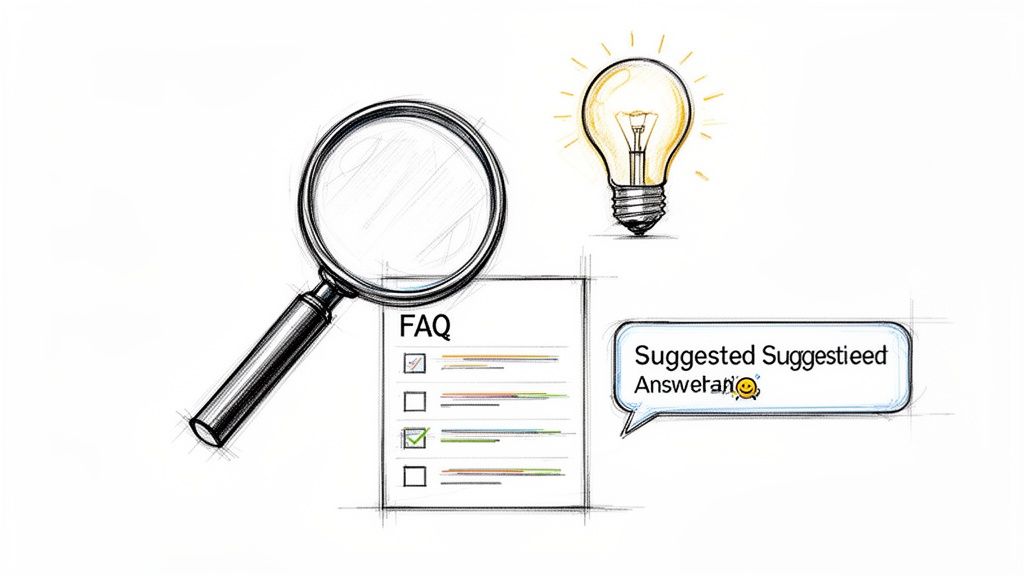
This approach is championed by modern helpdesks like Zendesk and Intercom, which use AI bots to provide instant answers. For example, when a customer buys a complex product like an IKEA furniture set, an automated email can be triggered post-purchase containing a link to assembly instructions and a video tutorial, preventing common setup frustrations.
Strategic Breakdown & Implementation
Why It Works: Predictive support directly addresses recurring friction points in the customer journey. By analyzing past support tickets and customer behavior, you can identify patterns and create resources that solve problems at scale, drastically reducing inbound ticket volume and improving the overall customer experience.
When to Use It: This strategy is ideal for businesses with identifiable, recurring customer questions. If your support team constantly answers the same 10-20 questions about product usage, returns, or technical issues, it's a clear signal to implement predictive support and automation. It's a powerful next step after mastering basic proactive communications.
Key Insight: The goal isn't just to answer questions faster; it's to eliminate the need for the customer to ask them in the first place. By anticipating their needs, you demonstrate a deep understanding of their experience and build confidence in your brand.
Actionable Takeaways
Here is how to implement this for your store:
- Pattern Analysis: Conduct a thorough analysis of your support tickets from the last 6-12 months. Identify the top 20 most frequently asked questions and categorize them by topic (e.g., shipping, product features, returns).
- Create Self-Service Content: Develop clear, concise FAQs, knowledge base articles, or short video tutorials that directly answer these common questions. To learn more about creating an effective self-service portal, explore these strategies for website self-service.
- MAILO AI Implementation: Use MAILO AI to analyze incoming emails and automatically suggest relevant FAQ articles as instant replies. Configure rules to detect keywords like "how to assemble" or "return policy" and trigger a pre-written response with a link to the appropriate help document, deflecting tickets before an agent ever sees them.
6. Triggered Upsell and Cross-Sell Communications
Proactive customer service extends beyond support into enhancing the customer's product experience. Triggered upsell and cross-sell communications involve automatically sending personalized product recommendations based on a customer's purchase history, browsing behavior, or specific inventory triggers. Instead of a generic marketing blast, this strategy anticipates what a customer might need or want next, presenting relevant products at the perfect moment.
This approach transforms a simple transaction into an ongoing, value-added relationship. Companies like Peloton excel at this, suggesting cycling shoes, weights, or apparel to new bike purchasers. Similarly, beauty brand Glossier might recommend a complementary cleanser a few weeks after a customer buys makeup. It’s a classic strategy, popularized by Amazon's "Frequently bought together" engine, refined for the modern e-commerce landscape.
Strategic Breakdown & Implementation
Why It Works: This is one of the most effective proactive customer service examples for increasing lifetime value. By using data to make relevant suggestions, you are serving the customer's potential needs while also boosting revenue. It shows you understand their goals and can help them get more value from their original purchase.
When to Use It: This is ideal for businesses with complementary products or a tiered product line. Use it post-purchase to enhance the initial order or when a customer shows high engagement by browsing related categories. It is particularly powerful for subscription models or products with natural replenishment cycles.
Key Insight: The most successful cross-sell emails are framed as helpful advice, not a hard sell. Position your recommendations as a way to "complete the look," "get the most out of your new [product]," or "join others who also bought," which builds trust and encourages conversion.
Actionable Takeaways
Here is how to implement this for your store:
-
Automation Trigger: Set up email flows triggered by a
purchase completedevent for a specific product or category. Use a time delay of 3-7 days to give the customer time to receive and appreciate their initial purchase before suggesting another. - Segmented Recommendations: Don't use a one-size-fits-all approach. Create segments based on purchase history. For example, a customer who bought a high-end coffee maker should receive recommendations for premium beans, not entry-level accessories.
- MAILO AI Implementation: Train MAILO AI to recognize inquiries about complementary products, such as "what else do I need for X" or "does this work with Y." The AI can then automatically respond with a pre-written template containing links to your curated cross-sell product collections, turning a support query into a sales opportunity.
7. Seasonal and Behavioral Re-engagement Campaigns
Anticipating customer needs isn't just about the immediate post-purchase journey; it's also about aligning with their broader buying cycles. Seasonal and behavioral re-engagement campaigns are a powerful proactive customer service example where brands use timely events like holidays, seasonal changes, or past purchase behavior to connect with customers before they even start shopping. By launching targeted campaigns for Black Friday, back-to-school, or a new season, you move from a reactive sales model to one that proactively guides customers toward relevant products.
This strategy is a cornerstone of modern retail, practiced by Shopify merchants preparing for BFCM, beauty brands like Sephora launching holiday gift guides, and apparel companies like J.Crew offering VIP early access to new seasonal collections. It's about being present and helpful during high-intent periods, turning predictable calendar dates into relationship-building opportunities.
Strategic Breakdown & Implementation
Why It Works: These campaigns tap into existing consumer mindsets and cultural moments. Customers are already primed to shop for specific needs (e.g., holiday gifts, summer apparel). By proactively reaching out with tailored suggestions and offers, you simplify their shopping process, increase relevance, and capture sales that might otherwise go to competitors.
When to Use It: This is crucial for businesses with seasonal product cycles or those in industries heavily influenced by holidays and events (e.g., fashion, beauty, gifts, home goods). Plan your campaign calendar at least 6-9 months in advance to prepare content, segment audiences, and align inventory.
Key Insight: Proactive seasonal marketing is customer service in disguise. You are not just selling; you are anticipating a customer's upcoming need and providing a curated solution, which saves them time and effort.
Actionable Takeaways
Here is how to implement this for your brand:
- Audience Segmentation: Divide your audience based on past behavior. Create segments for VIPs (early access), engaged customers (standard offer), and inactive subscribers (a stronger re-engagement incentive).
- Urgency & Scarcity: Incorporate countdown timers in emails for flash sales or use dynamic messaging like "Only 5 left in your size!" to encourage immediate action and prevent procrastination.
- MAILO AI Implementation: Use MAILO AI to handle the inevitable influx of questions that come with major campaigns. Set up rules to auto-reply to common queries about promotion details, shipping deadlines for holidays, or return policies. You can also use its AI to generate multiple variations of campaign messaging to test which one resonates best with different audience segments.
8. Intelligently Timed Service Updates and Education Emails
Beyond the transaction, proactive customer service involves helping customers get the most value out of their purchase. This means sending intelligently timed educational content, such as product feature guides, usage tips, or care instructions. Instead of waiting for customers to encounter problems or ask for guidance, you proactively provide the information they need to succeed, turning the post-purchase phase into an extended onboarding experience.
This strategy is mastered by brands like Peloton, which sends workout tips after a purchase, and Apple, which educates new Mac owners on hidden features. The goal is to anticipate common user questions and points of friction and address them before they arise. It transforms your role from a reactive problem-solver to a proactive value-provider.
Strategic Breakdown & Implementation
Why It Works: Proactive education reduces support tickets related to product misuse or misunderstanding. More importantly, it increases customer satisfaction and product adoption by ensuring users experience the full benefits of what they bought, which directly impacts long-term loyalty and reduces returns.
When to Use It: This is crucial for products with a learning curve, specific care requirements, or hidden features. It is ideal for electronics, high-end apparel, complex home goods, or any item where proper use significantly enhances the customer experience. The first email should arrive 3-5 days after delivery when the customer is most engaged.
Key Insight: A customer who feels confident and successful using your product is far more likely to become a repeat buyer and a brand advocate. These educational touchpoints are investments in maximizing the perceived value of every purchase.
Actionable Takeaways
Here is how to implement this for your store:
-
Automation Trigger: Set up an email sequence in your marketing platform to trigger 3-5 days after an order's
deliveredstatus is confirmed. Use product tags to segment customers and send specific educational content relevant to the exact item they purchased. - Content Series: Create a short (3-5 part) email series. The first can cover setup and basic use, the second can highlight an advanced feature, and the third can offer maintenance tips. Use clear, non-technical language and include visuals like GIFs or short videos. You can learn more about how to set up these kinds of sequences in our guide to Shopify email automation.
- MAILO AI Implementation: Use MAILO AI to generate the content for your educational emails. Provide a prompt like, "Write a 3-part email series for a customer who just bought our [Product Name]. The series should cover initial setup, a pro-tip for advanced use, and long-term care instructions. Maintain a friendly and helpful brand voice." This ensures consistent, high-quality content for every product in your catalog.
Proactive Customer Service: 8-Point Comparison
| Feature / Use Case | Implementation Complexity 🔄 | Resource Requirements ⚡ | Expected Outcomes 📊 | Ideal Use Cases 💡 | Key Advantages ⭐ |
|---|---|---|---|---|---|
| Proactive Order Status Updates | 🔄 Low–Medium — Shopify-native triggers; needs fulfillment/inventory sync | ⚡ Low — templates, channel setup, tracking links | 📊 ↓ Support tickets ~20–30%; improved delivery transparency | 💡 High-volume DTC or retail stores with regular shipping | ⭐ Real-time transparency; fewer tracking inquiries |
| Proactive Review & Feedback Requests | 🔄 Medium — timing logic and review-platform integrations | ⚡ Moderate — copy, incentives, integrations (Trustpilot/Yotpo) | 📊 ↑ Reviews 300–500%; better SEO and product insights | 💡 Product-heavy stores seeking social proof and feedback | ⭐ Large uplift in review volume; actionable product feedback |
| Abandoned Cart Recovery w/ Recommendations | 🔄 Medium — cart detection, dynamic content, multi-touch flows | ⚡ Moderate — recommendation engine, creative assets, discounts | 📊 Recovers ~10–30% of abandoned cart value; high ROI | 💡 Stores with measurable cart abandonment and browsable catalogs | ⭐ Recapture lost revenue with personalized, timely nudges |
| Win-Back Campaigns for Lapsed Customers | 🔄 Medium — segmentation rules and sequence design | ⚡ Low–Moderate — data segmentation, incentives, creative | 📊 Lower reactivation cost (5–7x cheaper than acquisition); modest reactivation rates | 💡 Subscription or repeat-purchase businesses aiming to reduce churn | ⭐ Cost-effective reactivation leveraging existing customer data |
| Predictive Support & FAQ Automation | 🔄 High — AI modeling on historical tickets and prediction logic | ⚡ High — historical data, NLP/AI tooling, content creation | 📊 ↓ Support tickets 20–40%; faster self-service resolution | 💡 Complex products or high-support-volume businesses | ⭐ Scales self-service; surfaces common issues before they escalate |
| Triggered Upsell & Cross-Sell Communications | 🔄 Medium–High — behavior triggers and recommendation algorithms | ⚡ Moderate — product catalog sync, dynamic templates, A/B testing | 📊 ↑ Average order value 10–25%; increased basket relevance | 💡 Merchants with complementary SKUs or high-margin accessories | ⭐ Boosts AOV with personalized, behavior-driven offers |
| Seasonal & Behavioral Re-engagement Campaigns | 🔄 Medium — campaign calendar, thematic assets, timing rules | ⚡ Moderate — planning, design, segmentation, countdown mechanics | 📊 Higher conversion during peak seasons; improved campaign ROI | 💡 Retailers targeting holidays, seasonal peaks, or product launches | ⭐ Captures high-intent demand with timely, themed messaging |
| Timed Service Updates & Educational Emails | 🔄 Medium — lifecycle triggers and progressive content sequencing | ⚡ High — content library (videos/guides), personalization, cadence control | 📊 ↓ Support tickets 15–25%; increased product engagement and retention | 💡 High-involvement or technical products needing user education | ⭐ Reduces misuse/returns and increases perceived product value |
From Reactive to Proactive: Making the Shift with Automation
Transitioning from a reactive "firefighting" mode to a proactive, strategic approach to customer service is the single most impactful shift an e-commerce brand can make. The proactive customer service examples we have explored, from intelligent order status updates to predictive FAQ automation, are not just isolated tactics; they represent a fundamental change in how you view the customer journey. Instead of waiting for problems to arise, you are actively anticipating needs, preventing issues, and creating moments of delight that build lasting loyalty.
This shift moves customer service from a cost center to a powerful revenue and retention engine. Think about the cumulative effect of these strategies: an abandoned cart is recovered, a potential support ticket about shipping is deflected, a one-time buyer is converted into a repeat customer through a timely win-back campaign, and a shopper is gently upsold on a complementary product they genuinely need. Each action, when automated, works tirelessly in the background to increase Customer Lifetime Value (CLV) and reduce customer acquisition costs.
Synthesizing the Strategy: Your Proactive Playbook
The core lesson from these examples is that proactivity is powered by two key elements: data-driven triggers and intelligent automation. You are not guessing when to reach out; you are using specific customer behaviors and order data to initiate a relevant, personalized conversation.
Let’s recap the foundational principles:
- Anticipate Needs: Use data like order status, past purchase history, and browsing behavior to predict what a customer will need next. This is the heart of proactive support.
- Personalize at Scale: Automation doesn't mean generic. By leveraging dynamic tags and customer segments, you can deliver messages that feel one-to-one, even when sent to thousands.
- Reduce Friction: The goal of many proactive communications is to make the customer's life easier. Answering a question before it’s asked or providing a direct link to a tracking page removes effort and builds goodwill.
- Create Value, Not Noise: Every proactive message should serve a clear purpose that benefits the customer, whether it's providing crucial information, offering a relevant recommendation, or soliciting valuable feedback.
Your First Steps to Proactive Excellence
Implementing all these ideas at once can feel overwhelming. The key is to adopt an iterative approach. You do not need to build a complex, multi-layered proactive system overnight. Instead, start with the "low-hanging fruit" that will deliver the most immediate impact with the least amount of effort.
For most Shopify brands, this starting point is often one of two areas:
- Proactive Order Status Updates: This immediately addresses the most common customer inquiry ("Where is my order?") and can significantly reduce the volume of incoming support tickets.
- Abandoned Cart Recovery: This is a direct revenue-generating activity. A simple, well-timed, and personalized abandoned cart sequence can recover a surprising amount of otherwise lost sales.
Begin by mastering one of these workflows. Set it up, monitor the key performance indicators (KPIs) like ticket reduction rate or cart recovery rate, and gather insights. Once you have a successful and optimized workflow, you can move on to the next. This methodical approach ensures you build a robust, effective proactive communication strategy piece by piece, rather than launching a dozen half-baked initiatives.
The journey from reactive to proactive is not about adding more work for your team; it is about making technology do the heavy lifting. By leveraging automation, you empower your support agents to focus on the complex, high-empathy interactions that truly require a human touch. This creates a more efficient operation and a more fulfilling work environment for your team, all while delivering a superior experience for your customers.
Ready to turn these proactive customer service examples into reality for your Shopify store? MAILO AI is designed to make it simple, with pre-built templates and intelligent triggers that automate the very strategies discussed in this article. Start deflecting tickets, recovering revenue, and delighting your customers today by exploring what you can build with MAILO AI.